Wet filament test
Print it, dry the spool, print it again. Whatever changed is water.
- Print it
- Check print 1
- Dry, print again
- Check print 2
The print
64 × 26 × 27 mm, about 4.6 g of PLA or PETG, 17 to 42 min on the makers' standard profiles. Made for a 0.4 mm nozzle: the ring is one line wide (0.45 mm). No file for your printer? The STL is the whole test.
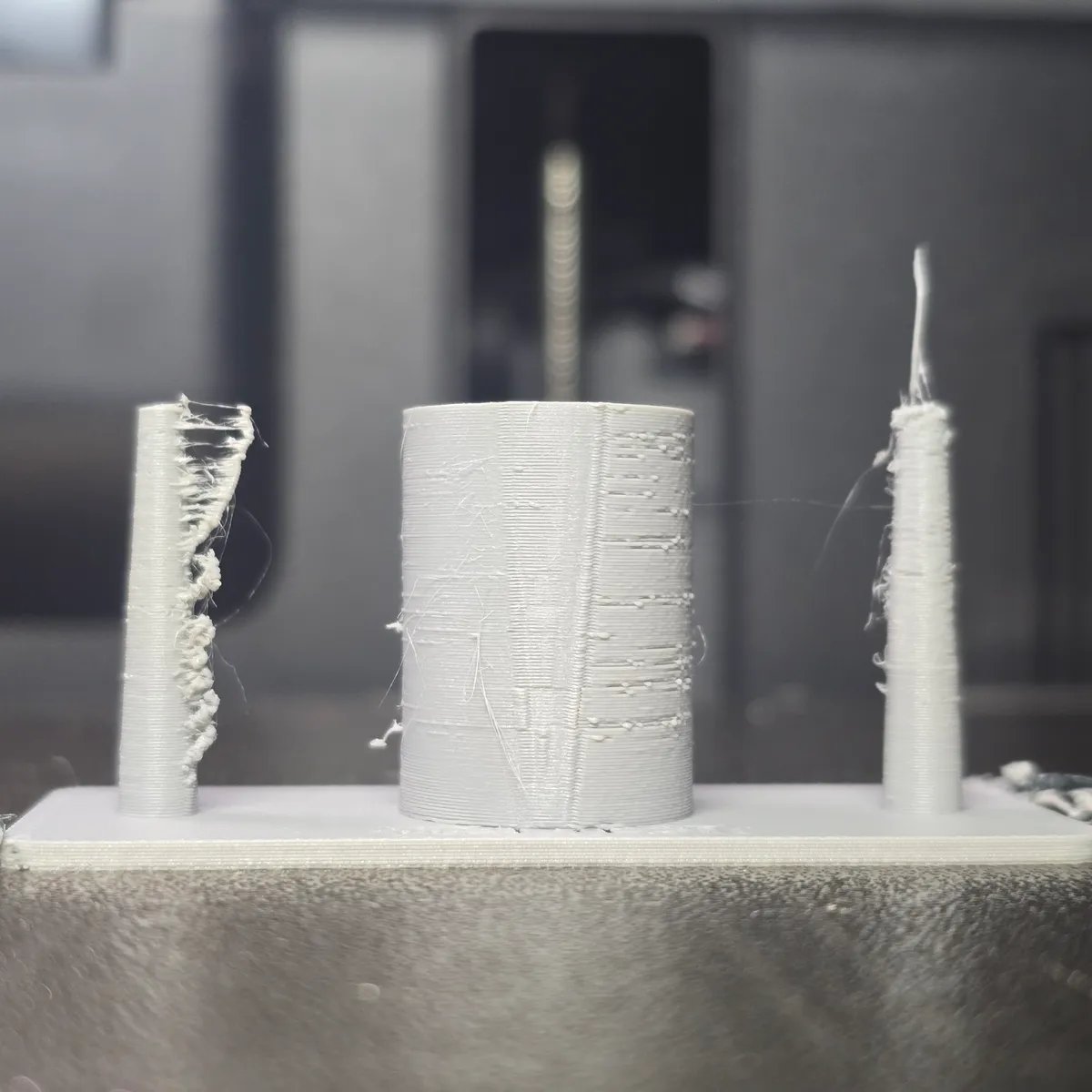
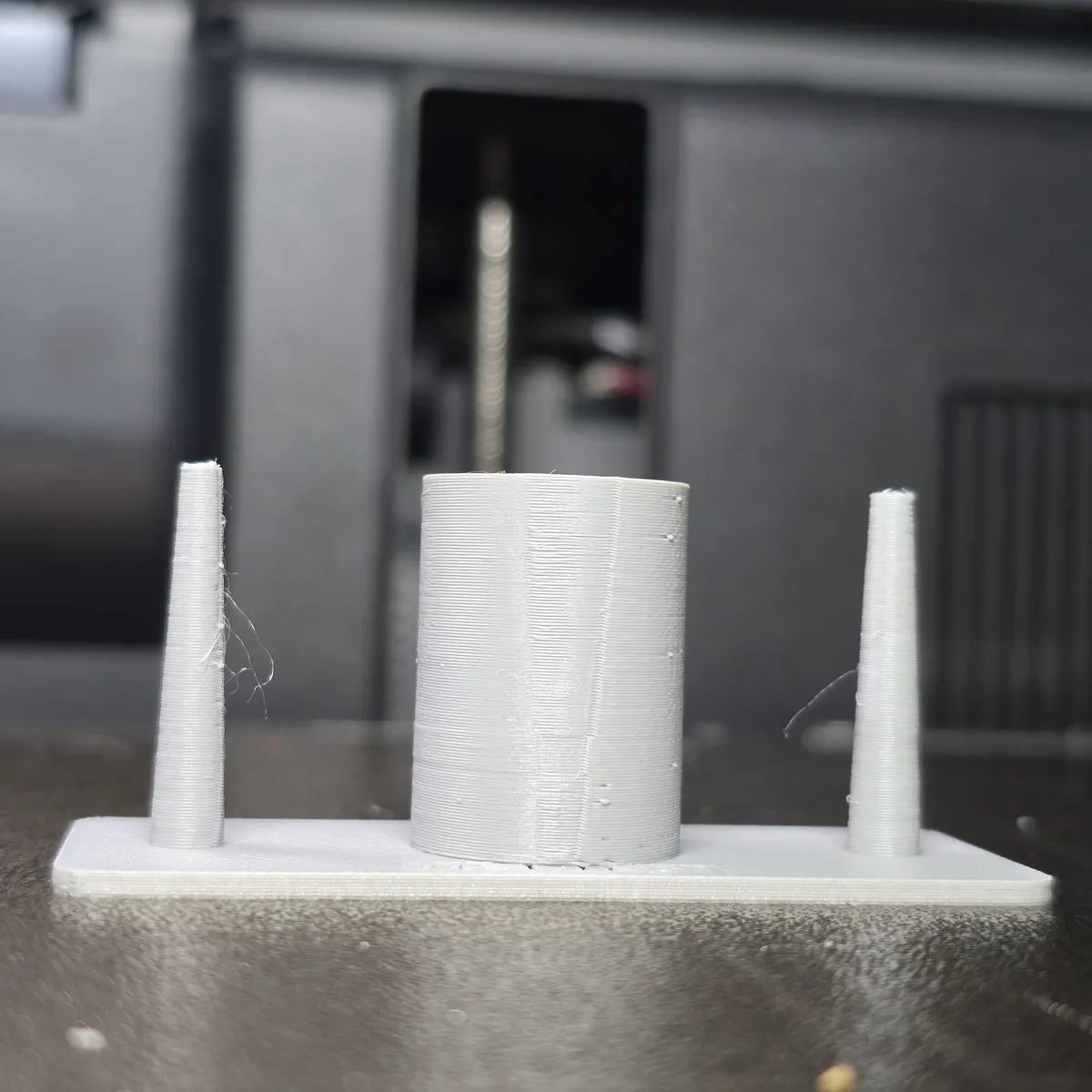
What you saw
| Look for | Print 1 | Print 2 |
|---|---|---|
| Popping or hissingAt the nozzle while it prints | ||
| StringsBetween the posts and the ring | ||
| Zits and blobsThe ring, the posts, the end of the base | ||
| PinholesThe ring, held up to a light | ||
| Craters or fuzzThe flat top of the base |
Dry the spool to its brand's own spec. eSUN publishes 50°C for PLA and 60 to 65°C for PETG, without hours; the other brands are in our drying table.
Fill in print 1
One print can already clear the spool: if print 1 shows none of these, it is not wet.