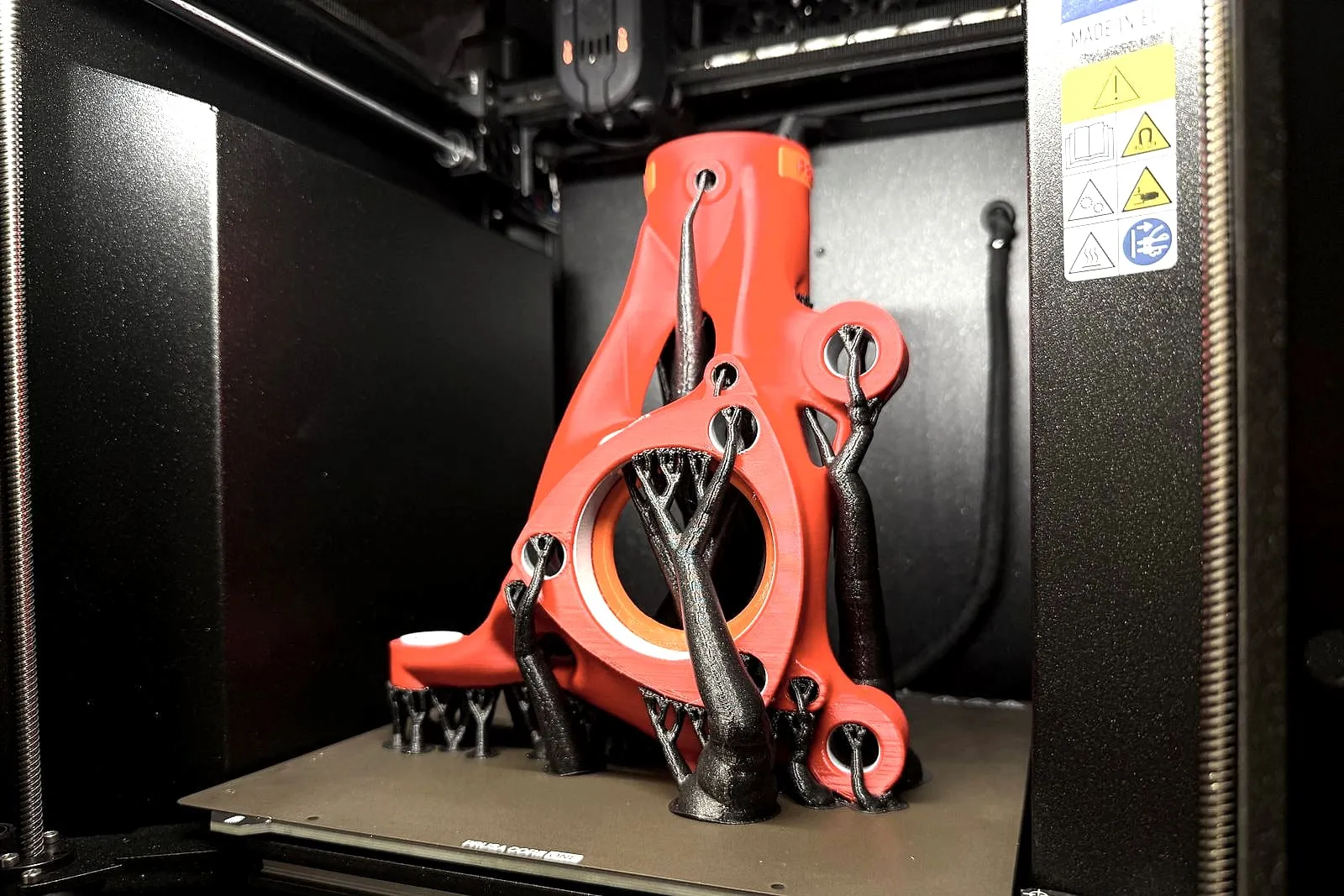
Prusa’s Core One+ INDX packs eight independent extruders, aiming for multi-material and multi-color prints with a claimed 0.013 grams of purge waste per color or material change, instead of the usual tower waste. Testing by Thomas Sanladerer, reported by Hackaday on October 12, found the printer’s mandatory startup calibration sequence is tuned only for Prusa’s own Prusament filament.
Sanladerer couldn’t get Voxel PLA to print until he manually stripped the calibration sequence out of the g-code. The cause, per the video transcript: Voxel PLA oozes slightly more than Prusament, and since the INDX calibrates by sensing force on the nozzle, that extra ooze changes where the nozzle tip registers contact and breaks the cycle. At 4:24 in the video, material is visibly oozing from the nozzle. Prusa support reportedly told him to try Prusament instead to resolve it.
| Issue found | Detail |
|---|---|
| Purge waste claim | 0.013 g per color/material change |
| Extruders | 8 independent, dual-gear Bondtech |
| Calibration | Mandatory on every print start, not saved between prints despite display claim |
| Camera/chamber view | Blocked by INDX hardware, hard to confirm filament loaded |
Even manually running calibration doesn’t stick: the display claims it saved the result, but Sanladerer found it has to re-run on the next print regardless. The camera, meant for chamber monitoring, is now blocked by the INDX hardware itself, and checking filament has loaded by eye is “borderline impossible” according to the writeup.
Hackaday’s comparison point is Prusa’s own XL toolchanger, which Sanladerer reportedly ran against the Core One+ INDX in the same test and found simply worked where the INDX struggled, even on some Prusa-branded filaments. The piece also names the Bambu Lab H2C and Snapmaker U1 as competing multi-toolhead machines the INDX now has to be measured against.
Price and release date for the Core One+ INDX upgrade are not stated in the source.